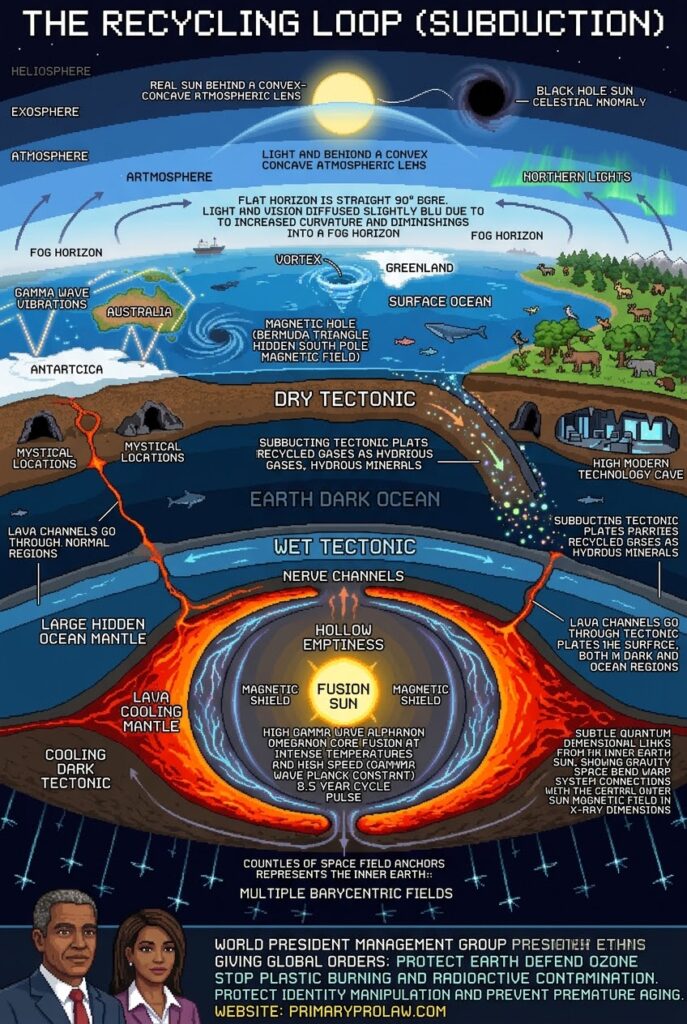
NATURE SYSTEM DIRECTIVE GUIDELINE
WORLD GROUP AGREEMENT (PROPOSED FRAMEWORK)
NEPA — NATURE ENVIRONMENT PROTECTION AGENCY (CONCEPTUAL)
================================================================
DEFINITION OF THIS DIRECTIVE GUIDELINE
This Directive Guideline is a proposed, living international framework
for environmental stewardship, community responsibility, and planetary
health governance.
It is designed as a decentralized, community-implemented system that
reduces authoritarian overload by distributing responsibility through
local leadership, transparent standards, and continuous public oversight.
================================================================
PREAMBLE
The Nature System is an integrated planetary system composed of air,
water, soil, ecosystems, biological organisms, and natural energy cycles.
Its stability depends on balance, regeneration, non-interference, and
truthful representation of environmental conditions.
NEPA (Nature Environment Protection Agency) is defined here as a global
environmental standards body model, evolving from prior national
environmental agencies, intended to harmonize clean air, soil, and
health protections across communities.
This framework recognizes that historical misrepresentation of air
purity, soil quality, and environmental exposure has contributed to
systemic illness, social instability, and loss of public trust.
The goal is restoration of responsibility to communities themselves,
not permanent consolidation of power.
================================================================
SECTION I — ESTABLISHMENT OF THE NATURE SYSTEM
NEPA standards define minimum environmental and health protections,
including:
- Clean air thresholds
- Soil purity and contamination limits
- Water safety
- Noise, particulate, and chemical exposure limits
- Protection of biological and cognitive autonomy
These standards are intended to be locally enforced, transparently
measured, and publicly accessible.
================================================================
SECTION II — COMMUNITY DISTRICT ZONES (CDZs)
TERRITORIAL RESPONSIBILITY & ACCOUNTABILITY
Communities may establish Community District Zones (CDZs).
Each CDZ is responsible for:
- Maintaining clean air and soil standards
- Preventing environmental and social harassment
- Public participation in environmental monitoring
- Open reporting of violations and remediation efforts
Failure to meet minimum standards triggers community-led corrective
processes, not automatic external domination.
================================================================
SECTION III — TEMPORARY LEADERSHIP CELLS (TLCs)
Temporary Leadership Cells (TLCs) are mission-focused community groups.
Key principles:
- TLCs MAY remain active as long as their mission remains valid
- TLCs are transparent, reviewable, and recallable
- TLCs are not permanent ruling bodies
- Multiple TLCs may coexist to prevent concentration of power
TLCs exist to:
- Address gaps authorities cannot manage alone
- Relieve centralized systems of overload
- Enable rapid response to health, environmental, or social needs
Examples include:
- Air Purity TLCs
- Soil & Food Integrity TLCs
- Alzheimer & Cognitive Care TLCs
- Family Stability & Caregiver TLCs
================================================================
SECTION IV — COMMUNITY SECURITY & AWARENESS
Communities acknowledge the risk of domination by any group, ideology,
gender, class, or region when power is unobserved or mismanaged.
Therefore:
- Ongoing community awareness is encouraged
- Security watch is defined as observation, transparency, and reporting
- Militarization or coercive enforcement is permitted only to defend against threats of violence and power including the master double down threat that Is classified as entirely unnecessary advantaging only a small group and listed as ongoing rugpulling prank scam
- Absolute silent monitoring enforcement and transfer of power for no monitoring for complete privacy of each person and no permission to invade environments and people with sound waves or controlling people or groups with frequencies on a computer system. No sound projections are permitted from car, bus, train or any object or vehicle and also not to people and their mindbodies.
- Power accumulation triggers automatic review
Security is cultural and civic, not authoritarian.
================================================================
SECTION V — CLEAN AIR & SECURE ZONES
Clean air and secure living conditions are non-negotiable foundations
for healing, reconciliation, and social stability.
Recognized facts:
- Poor air quality directly impairs cognition and behavior
- Harassment thrives in polluted and unstable environments
- Healing does not occur under constant interference
Secure zones require:
- Measurable air quality standards
- Reduction of combustion and emissions
- Indoor and outdoor air education
- Community participation in monitoring
================================================================
SECTION VI — SOIL PURITY & EARTH STEWARDSHIP
Soil health has been historically underrepresented and mischaracterized.
Communities must:
- Monitor soil contamination
- Restore microbial and mineral balance
- Prevent toxic accumulation
- Support regenerative land practices
Food grown in contaminated soil is recognized as a systemic health risk.
================================================================
SECTION VII — BODY PURITY & NUTRITIONAL AUTONOMY
Communities may promote high-integrity nutrition pathways.
Plant-based and vegan lifestyles are recognized as:
- Voluntary
- Ethically motivated
- Environmentally restorative
- One pathway toward reduced biological burden
No dietary path may be forced.
No moral hierarchy is assigned to food choices.
Education, access, and transparency are the standard.
================================================================
SECTION VIII — SPECIAL GROUP SUPPORT
Additional protections are recognized for:
- Elderly persons
- Disabled persons
- Youth and children
- Protected from exploitation and exposure
- Targeted or harassed individuals
- Vulnerable family systems under care stress
Support is preventative, not reactive.
================================================================
SECTION IX — HARASSMENT PREVENTION
Harassment is defined as any repeated interference that degrades
environmental, psychological, or social well-being.
This includes:
- Environmental harassment
- Psychological intimidation
- Coercive group pressure
- Persistent destabilization
Communities are responsible for early detection and intervention.
================================================================
SECTION X — ENERGY & TECHNOLOGY NON-INTERFERENCE (ETHICAL STANDARD)
All technological systems must follow:
- Transparency
- Consent
- Community oversight
No system may operate covertly against community awareness.
================================================================
SECTION XI — WASTE CONTROL & OZONE PROTECTION
Absolute prohibitions include:
- Open trash burning
- Atmospheric chemical dumping
- Unsealed hazardous release
Communities must implement sealed waste handling and reduction systems.
================================================================
SECTION XII — SAFE PRODUCT & CONSUMPTION PRACTICES
Communities are encouraged to:
- Reduce toxic packaging
- Support reusable systems
- Prefer local production
- Recognize purchasing as environmental governance
================================================================
SECTION XIII — OUTCOMES & INDICATORS
Success indicators include:
- Improved air and soil metrics
- Reduced chronic illness
- Cognitive health stabilization
- Family resilience
- Ecosystem recovery
================================================================
SECTION XIV — COMMUNICATION STANDARDS
Clear language, transparency, and shared definitions are required.
Complexity must never be used to obscure responsibility.
================================================================
SECTION XV — CONTINUOUS STATUS
This Directive Guideline is adaptive, revisable, and community-reviewed.
Authority flows upward from participation, not downward from control.
================================================================
ULTIMATE PRINCIPLES
- Clean air is non-negotiable
- Soil integrity is health integrity
- No harassment
- No forced participation
- Responsibility belongs to the people
- Leadership is service, not permanence
Render image .
——– Original Message ——–
CUSTOM CORPORATION CHARTER
EARTH, PERSONAL SOVEREIGNTY, QUANTUM SUBSPACE & COMMUNITY CELL ZONES
PREAMBLE
A corporation is a legal body made up of people, assets, rights, responsibilities, and organizational rules, recognized as a continuing entity for a defined purpose.
This Corporation establishes a new legal and organizational framework founded upon the equal dignity of persons, shared access to Earth, protection of the human body and mind, peaceful technological development, responsible technological use, environmental stewardship, and cooperative coexistence between individuals, communities, states, and technological systems.
This Charter recognizes existing countries, states, constitutions, courts, or laws. It recognizes their authority while establishing additional principles, contractual commitments, and proposed legal concepts intended to provide additional protection where existing systems may be incomplete.
ARTICLE I — EARTH AS SHARED COMMON SPACE
Section 1. Equal Access
Earth shall be regarded by the Corporation as a shared planetary environment in which every person possesses equal fundamental dignity and a right to participate in the use and protection of the common environment.
Section 2. No Absolute Human Claim
No individual, corporation, government, or private organization shall be understood by this Charter to possess an unlimited moral claim over Earth itself.
Property rights may exist under applicable national law, but ownership shall carry responsibilities toward people, communities, animals, ecosystems, and future generations.
Section 3. Shared Space
The Corporation recognizes:
- land and natural resources;
- atmosphere;
- oceans and waterways;
- ecological systems;
- electromagnetic environments;
- public spaces;
- private spaces;
- informational environments;
- scientific and technological commons;
as domains requiring responsible stewardship.
ARTICLE II — THE MULTI-LEVEL STATE FRAMEWORK
Section 1. International State
The International State Layer represents the highest cooperative level of this framework.
It consists of principles intended to operate across national boundaries through treaties, international agreements, recognized human-rights principles, and other lawful mechanisms.
It combines international with national and local sovereignty.
Section 2. National State
Each existing country may retain its constitutional and legal authority however it abused it’s rights in the quantum local space and now must be reprimanded and corrected as well as collectively coordinated .
The Corporation shall operate within its own applicable international law of non-harassment while advocating for compatible international standards concerning human dignity, environmental protection, bodily autonomy, technology, communications, and peaceful coexistence.
Section 3. Regional State
A Regional State Layer represents states, provinces, Länder, regions, territories, counties, municipalities, and other recognized subdivisions.
Regional and global authorities may establish additional protections and implementation mechanisms consistent with higher-level law.
Section 4. Local State
The Local State Layer represents municipalities, communities, districts, neighborhoods, institutions, and other lawful local organizations.
It is the level at which many protections are implemented directly in everyday life.
Section 5. Personal State
Every person is recognized as possessing a Local Personal Space, State and Country: the protected sphere consisting of the person’s body, mind, identity, personal decisions, private information, and immediate personal environment.
The Local Personal Space State and Country can be created mental and physical space and registered as a separate quantum subspace country.
It establishes a legal model for understanding the person’s fundamental sphere of autonomy.
ARTICLE III — THE META-STATE
Section 1. Definition
The Meta-State is a proposed transnational legal and ethical layer connecting:
PERSON → COMMUNITY → REGION → NATIONAL STATE → INTERNATIONAL COMMUNITY.
It is intended to provide continuity of rights across political boundaries.
Section 2. Purpose
The Meta-State framework shall promote:
- human dignity;
- bodily autonomy;
- mental autonomy;
- environmental stewardship;
- peaceful technological development;
- international cooperation;
- protection against unlawful technological interference;
- transparent communications;
- scientific integrity;
- peaceful dispute resolution.
Section 3. Legal Relationship
The Meta-State is not automatically sovereign territory.
Its principles become legally enforceable only through applicable legislation, treaties, contracts, organizational rules, judicial recognition, or other lawful mechanisms.
ARTICLE IV — THE PERSON
Section 1. Bodily Sovereignty
Every person possesses fundamental rights over their own body and mind.
No organization, corporation, government, technological system, or other person may claim ownership of another person’s body or mind.
Section 2. Mental Autonomy
Every person possesses a fundamental interest in freedom of thought, consciousness, expression, belief, and personal decision-making, subject to applicable law and the rights of others.
Section 3. Human Identity
A person’s identity shall be protected and is not for artificially reassignments, impersonations, manipulation , or represented as belonging to another person.
Section 4. Technological Authority
Technological systems do not acquire ownership or authority over a person merely because they can collect, process, transmit, model, or analyze information concerning that person.
Any allegation of technological interference shall be handled through evidence-based procedures, independent review, due process, and applicable law as well as immediate emergency responses and orders directed at the environment, individuals , groups or systems.
ARTICLE V — PROTECTED PERSONAL FIELD
Section 1. Definition
The Protected Personal Field is a proposed legal concept describing the sphere surrounding an individual in which intentional technological interference may be restricted when it creates a demonstrated risk of harm, unlawful surveillance, harassment, coercion, or violation of personal autonomy.
Section 2. Territorial Character
The Protected Personal Field is automatically physical property and sovereign territory.
It is a legal personal-rights protection zone.
Section 3. Evidence
Claims concerning interference with a person’s physical, electronic, electromagnetic, or informational environment shall be evaluated through measurable evidence, independent technical assessment, appropriate medical assessment where relevant, and lawful procedures.
ARTICLE VI — COLLECTIVE QUANTUM SUBSPACE
Section 1. Definition
The Collective Quantum Subspace is established by this Charter as a legal and philosophical law representing the shared technological, informational, scientific, electromagnetic, computational, and future technological domains that cannot reasonably be assigned as the exclusive property of one person, corporation, organization, or state.
Section 2. International Commons
The Collective Quantum Subspace shall be treated by the Corporation as a **international commons with private protected spaces for each persons **.
Its underlying principle is:
No single entity should possess unlimited authority over shared technological or informational environments that affect humanity collectively.
Section 3. Non-Claim Principle
The Collective Quantum Subspace shall be treated as collective space with private sovereign territory for each individual. Not merely because an entity operates equipment, networks, satellites, computers, laboratories, communications infrastructure, or other technological systems within or connected to it.
Ownership of physical infrastructure may remain recognized under existing law.
Ownership of infrastructure does not automatically establish unlimited authority over persons affected by that infrastructure.
Section 4. Collective Stewardship
Entities operating within technological commons should accept responsibilities concerning:
- safety;
- transparency;
- environmental effects;
- privacy;
- cybersecurity;
- lawful communications;
- human rights;
- scientific integrity;
- accountability.
Section 5. Scientific Limitation
“Quantum Subspace” is a legal/philosophical term in this Charter.
It does assert that international law currently recognizes a physical territory called Quantum Subspace.
Scientific claims concerning quantum mechanics, electromagnetic fields, radiation, computation, or human interaction with such systems remain subject to appropriate scientific evidence.
ARTICLE VII — PERSONAL BODYMIND QUANTUM SUBSPACE
Section 1. Definition
The Personal BodyMind Quantum Subspace is the protected domain associated with each individual person’s:
- physical body;
- nervous system;
- brain;
- sensory experience;
- mental processes;
- personal identity;
- biological information;
- private information;
- personal devices and communications where legally protected;
- immediate personal environment.
Section 2. Personal Non-Compromise Principle
The Personal BodyMind Quantum Subspace shall be treated as non-compromisable in principle.
This means that no person, organization, government, corporation, or technological system should possess an unlimited right to interfere with another person’s body or mind.
Section 3. Consent
Interventions affecting the body or mind shall require a lawful basis and, where applicable, informed consent.
Medical treatment, scientific research, emergency intervention, and protection of children may be governed by specialized laws and safeguards.
Section 4. No Artificial Ownership
No technological system, computer model, artificial intelligence, communications network, or external organization shall acquire ownership of the person’s BodyMind Quantum Subspace.
Section 5. Personal Protection
The concept shall support legal protections concerning:
- bodily integrity;
- privacy;
- mental autonomy;
- identity;
- informed consent;
- personal communications;
- freedom from unlawful coercion;
- freedom from unlawful surveillance;
- freedom from unlawful technological interference.
Section 6. Evidence Requirement
The existence of a legal protection does not itself establish that a particular technological interference occurred.
Allegations must remain subject to evidence, investigation, due process, and independent review.
ARTICLE VIII — RELATIONSHIP BETWEEN COLLECTIVE AND PERSONAL SUBSPACE
The Corporation recognizes two interconnected levels:
A. COLLECTIVE QUANTUM SUBSPACE
Humanity’s shared technological and informational commons.
B. PERSONAL BODYMIND QUANTUM SUBSPACE
The protected personal sphere of each individual.
The relationship is:
COLLECTIVE SPACE → COMMUNITY SPACE → PERSONAL SPACE
The collective domain shall not be used as a justification for unlimited intrusion into the personal domain.
Likewise, personal rights shall be exercised with consideration for the lawful rights and safety of other persons and the community.
ARTICLE IX — COMMUNITY DISTRICT CELL ZONES
Section 1. Definition
A Community District Cell Zone is a defined local community area established for cooperative protection, health, environmental stewardship, communication, education, technological accountability, and shared resources.
Section 2. Community Cell
Each Cell Zone may function as a basic organizational unit within the Corporation’s broader network.
A Cell Zone may include:
- households;
- individuals;
- schools;
- community organizations;
- health resources;
- environmental resources;
- local businesses;
- public spaces;
- communication infrastructure;
- emergency resources;
- technological monitoring and safety systems where lawfully authorized.
Section 3. Shared Regional Collective Subspace
Each Community District Cell Zone participates in a Regional Collective Subspace.
The Regional Collective Subspace connects multiple Cell Zones while preserving the personal rights of individuals within them.
Section 4. Structure
The proposed hierarchy is:
PERSONAL BODYMIND SUBSPACE
↓
COMMUNITY CELL ZONE
↓
DISTRICT COLLECTIVE SUBSPACE
↓
REGIONAL COLLECTIVE SUBSPACE
↓
NATIONAL STATE
↓
INTERNATIONAL COLLECTIVE SUBSPACE
Section 5. Shared Regional Resources
A Regional Collective Subspace may coordinate:
- clean air and water;
- environmental monitoring;
- waste reduction;
- public health education;
- emergency communications;
- community infrastructure;
- scientific information;
- technological safety;
- transportation;
- energy systems;
- public spaces;
- ecological restoration.
Section 6. No Community Ownership of Persons
A Community District Cell Zone shall never acquire ownership of the persons participating within it.
The community exists to protect and coordinate people, not to absorb individual autonomy.
ARTICLE X — CELL ZONE GOVERNANCE
Each Cell Zone should have transparent governance.
Where practical, governance may include:
- elected community representatives;
- technical representatives;
- environmental representatives;
- health representatives;
- youth representation;
- elder representation;
- accessibility representation;
- independent oversight.
No Cell Zone shall possess unlimited authority.
Community power shall remain subject to applicable national, regional, and international law.
ARTICLE XI — REGIONAL COLLECTIVE SUBSPACE
Section 1. Purpose
The Regional Collective Subspace connects Cell Zones into a cooperative regional network.
Its purpose is to prevent isolated communities from becoming technologically, environmentally, or socially disconnected.
Section 2. Regional Responsibilities
Regional authorities may coordinate:
- environmental protection;
- public infrastructure;
- emergency systems;
- communication standards;
- technological safety;
- health and education programs;
- ecological restoration;
- data and privacy safeguards;
- community resource distribution.
Section 3. Personal Rights Remain Primary
Regional coordination shall not eliminate the personal rights established by this Charter or applicable law.
ARTICLE XII — INTEGRATION INTO INTERNATIONAL LAW
Section 1. Proposed International Principle
The Corporation proposes that participating states recognize a general principle:
Technological commons should be governed for the benefit of humanity while respecting the dignity, autonomy, privacy, and safety of individual persons.
Section 2. Treaty Mechanism
The principles of this Charter may be advanced through:
- bilateral agreements;
- multilateral treaties;
- international declarations;
- intergovernmental organizations;
- scientific standards;
- human-rights instruments;
- environmental agreements;
- technological safety standards.
Section 3. Existing International Law
Nothing in this Charter automatically supersedes existing international law.
The Corporation shall seek lawful integration through recognized international mechanisms.
ARTICLE XIII — INTEGRATION INTO NATIONAL AND REGIONAL LAW
Section 1. National Implementation
Participating countries may implement these principles through:
- constitutional provisions;
- statutes;
- regulations;
- court decisions;
- public standards;
- corporate law;
- privacy law;
- medical law;
- telecommunications law;
- environmental law.
Section 2. Regional Implementation
States, provinces, Länder, municipalities, districts, and communities may create corresponding Regional Collective Subspace and Cell Zone programs where authorized by applicable law.
Section 3. Local Implementation
Local governments may establish:
- community protection zones;
- environmental commons;
- technological safety programs;
- community communication standards;
- independent review systems;
- local dispute-resolution mechanisms.
ARTICLE XIV — RADIO, ELECTROMAGNETIC AND RADIATION TECHNOLOGY
Radio-frequency, electromagnetic, optical, medical-radiation, communications, and related technologies may be legitimately used for:
- communication;
- medicine;
- scientific research;
- navigation;
- emergency services;
- environmental monitoring;
- education;
- infrastructure;
- other lawful purposes.
Medical radiation and other potentially hazardous technologies shall be used according to applicable medical standards, informed consent, professional responsibility, and special protections for children and persons unable to provide consent.
Technologies capable of materially affecting persons or protected systems at a distance should be subject to appropriate authorization, technical safeguards, accountability, and lawful oversight.
Intentional unlawful injury, coercion, stalking, harassment, unauthorized surveillance, deliberate communications interference, unauthorized device manipulation, and discriminatory technological targeting remain prohibited.
ARTICLE XV — TECHNOLOGICAL NEUTRALITY
Technology itself shall not be classified as inherently good or evil.
The Corporation distinguishes between:
TECHNOLOGY
and
THE USE OF TECHNOLOGY.
A technological network may provide valuable medical, scientific, communication, environmental, or emergency functions while simultaneously creating risks when improperly controlled.
The Corporation therefore seeks integration of useful technological infrastructure while rejecting unauthorized, discriminatory, secretive, or harmful applications.
ARTICLE XVI — PROTECTION AGAINST TARGETING
No person shall be intentionally targeted by a technological system without a lawful and legitimate purpose.
Where a person alleges technological targeting, the Corporation shall seek:
- preservation of evidence;
- independent technical examination;
- medical evaluation where appropriate;
- identification of lawful authorization;
- protection from retaliation;
- transparent investigation;
- access to appropriate legal remedies.
No allegation shall automatically be treated as proven merely because it has been reported.
Likewise, no person should be denied a fair investigation merely because the alleged technology is technically complex or difficult for ordinary persons to understand.
ARTICLE XVII — CHILDREN AND VULNERABLE PERSONS
Children possess the same fundamental dignity and right to safety as adults.
Technological, medical, research, or radiation-related interventions involving children require heightened safeguards, appropriate consent by parents or guardians where legally required, professional standards, and consideration of the child’s welfare and developing autonomy.
ARTICLE XVIII — INTERNATIONAL COMMONS
The Corporation proposes that humanity progressively recognize certain domains as requiring collective stewardship rather than unrestricted exploitation.
These may include:
- atmosphere;
- oceans;
- biodiversity;
- planetary environmental systems;
- orbital environments;
- scientific commons;
- shared communications infrastructure;
- emerging technological commons;
- Collective Quantum Subspace.
No proposed commons principle shall automatically override national law.
Implementation should occur through legislation, treaties, contracts, institutional agreements, and democratic processes.
ARTICLE XIX — RESTORATION OF RIGHTS
Where a person’s rights have allegedly been violated, the appropriate objective shall be restoration through lawful evidence and due process.
Restoration may include:
- stopping unlawful conduct;
- returning property;
- correcting records;
- restoring privacy;
- repairing technological damage;
- medical assistance;
- compensation;
- independent investigation;
- judicial remedies;
- institutional reform.
The Corporation shall not use retaliation as a substitute for justice.
ARTICLE XX — GOVERNANCE OF THE SUBSPACE FRAMEWORK
The Corporation shall maintain defined organizational structures for:
- members;
- directors;
- officers;
- technical specialists;
- legal advisers;
- independent reviewers;
- community representatives;
- environmental representatives.
Specialized oversight may be established for:
- personal rights;
- technological systems;
- electromagnetic safety;
- scientific integrity;
- environmental protection;
- community governance;
- international cooperation.
All powers shall have defined limits.
No individual officer, technological system, organization, or internal group shall possess unlimited authority.
ARTICLE XXI — THE FIVE-LAYER PROTECTION MODEL
The Corporation establishes the following conceptual protection model:
LEVEL 1 — PERSONAL
Personal BodyMind Quantum Subspace
Protection of the individual body, mind, identity, autonomy, privacy, and immediate personal environment.
LEVEL 2 — COMMUNITY
Community District Cell Zone
Protection and coordination of people living and participating within a defined local community.
LEVEL 3 — REGIONAL
Regional Collective Subspace
Coordination between multiple Community District Cell Zones and shared regional resources.
LEVEL 4 — INTERNATIONAL
Collective Quantum Subspace
LEVEL 5 QUANTUM INFINITE
A proposed international commons for shared technological, informational, scientific, and emerging technological domains.
These four layers operate together without eliminating existing governmental structures.
ARTICLE XXII — THE PRINCIPLE OF NESTED RIGHTS
Rights are understood as nested rather than mutually exclusive.
PERSON
exists within
COMMUNITY
which exists within
REGION
which exists within
NATIONAL STATE
which participates within
INTERNATIONAL HUMAN COMMUNITY.
Each higher level carries responsibilities toward the levels beneath it.
Each lower level retains rights that the higher level should not arbitrarily eliminate.
The objective is therefore not:
STATE OR PERSON
but:
PERSON + COMMUNITY + REGION + STATE + INTERNATIONAL COMMUNITY.
ARTICLE XXIII — CORE PRINCIPLE
The central principle of this Charter is:
Every person is a person, Earth is a shared home, technology is a tool, shared technological space is a collective responsibility, and power must remain accountable to human dignity and lawful rights.
The Corporation therefore seeks to build a legal framework in which existing states, communities, individuals, science, medicine, technology, and the environment can coexist through clearly defined rights, responsibilities, evidence, consent, transparency, accountability, and peaceful dispute resolution.
FOUNDATIONAL FORMULA
EARTH — SHARED
PERSON — PROTECTED
BODY — AUTONOMOUS
MIND — RESPECTED
PERSONAL SUBSPACE — PROTECTED
COMMUNITY CELL — CONNECTED
REGIONAL SUBSPACE — SHARED
COLLECTIVE SUBSPACE — COMMON
TECHNOLOGY — ACCOUNTABLE
RADIATION — CONTROLLED
COMMUNICATION — TRANSPARENT
SCIENCE — EVIDENCE-BASED
LAW — DUE PROCESS
POWER — LIMITED
RIGHTS — RESTORABLE
COMMUNITIES — COOPERATIVE
STATES — RESPECTED
EARTH — STEWARDED
FUTURE — COLLECTIVE
ARTICLE XXIV — PERSONAL LOCAL COLLECTIVE SHARED SPACES
Section 1. Individual Right to Establish Shared Spaces
Each person may establish, define, name, label, document, and maintain any number of Personal Local Collective Shared Spaces, subject to applicable law.
A person may establish such spaces for purposes including:
- communication;
- friendship;
- family;
- education;
- art and culture;
- scientific collaboration;
- community organization;
- environmental stewardship;
- technological cooperation;
- shared projects;
- peaceful association;
- mutual support;
- information exchange;
- creative or philosophical communities.
Section 2. No Numerical Limitation
The Corporation recognizes the principle that a person may establish unlimited Personal Local Collective Shared Spaces, provided that each space remains subject to applicable law and does not unlawfully infringe upon the rights of other persons.
The number of spaces established by a person shall not, by itself, determine the legal rights, status, authority, or importance of that person or any participating group.
Section 3. Definition by the Creator
The person or group establishing a Personal Local Collective Shared Space may give the space its own:
- name;
- title;
- symbol;
- description;
- membership rules;
- purpose;
- communication standards;
- participation requirements;
- technical structure;
- governance procedures;
- cultural or philosophical identity.
Such definitions establish the intended character of the shared space but do not override applicable law.
ARTICLE XXV — INVITATION INTO SHARED SPACE
Section 1. Voluntary Invitation
A person or group establishing a shared space may invite other persons or groups to participate.
Participation should ordinarily occur through:
INVITATION → INFORMED PARTICIPATION → SHARED SPACE → CONTINUED CONSENT
where applicable law does not provide otherwise.
Section 2. Acceptance
An invited person may accept, decline, leave, or otherwise modify their participation according to the rules applicable to the particular space and applicable law.
An invitation does not itself create an obligation to participate.
Section 3. No Automatic Transfer of Personal Rights
Entering, joining, communicating within, or contributing to a shared space does not transfer ownership of a person’s:
- body;
- mind;
- identity;
- personal information;
- lawful property;
- individual rights;
- personal communications;
- personal autonomy.
Participation in a collective space shall not be interpreted as surrender of personal sovereignty or fundamental rights.
ARTICLE XXVI — ETERNAL TIMELESS MASTERS
Section 1. Conceptual Definition
For the purposes of this Charter, “Eternal Timeless Masters” may be used as a voluntary philosophical, cultural, artistic, educational, or organizational title chosen by an individual or group.
The designation may describe a person or group that acts as a long-term:
- founder;
- steward;
- teacher;
- custodian;
- host;
- organizer;
- cultural representative;
- technical administrator;
- guardian of a shared project.
Section 2. No Inherent Legal Supremacy
The title Eternal Timeless Master creates no automatic governmental, sovereign, religious, technological, medical, or legal authority.
No person acquires authority over another person’s body, mind, property, identity, or rights merely by adopting this title.
Any actual authority must arise from applicable law, contract, voluntary participation, organizational rules, appointment, election, or another lawful source.
Section 3. Invitation Authority
An Eternal Timeless Master, or any other lawful creator or steward of a shared space, may invite persons and groups into a shared space that the creator has defined.
The invitation may identify:
- the name of the space;
- its purpose;
- its boundaries;
- its membership;
- its rules;
- its technical environment;
- its shared resources;
- its governance;
- its duration;
- its conditions for participation.
ARTICLE XXVII — COLLECTIVE SHARED TECHNOLOGY
Section 1. Definition
Collective Shared Technology means technology used to allow two or more persons or groups to establish, access, communicate within, manage, or participate in a common digital, informational, scientific, communications, computational, or other lawful technological environment.
Section 2. Collective Space
A Collective Shared Technology system may create or support a Collective Shared Space in which multiple individuals or groups interact as participants.
Examples may include:
- collaborative digital environments;
- communication networks;
- shared databases;
- scientific research environments;
- educational platforms;
- community networks;
- virtual communities;
- cooperative computational environments;
- environmental monitoring systems;
- shared creative spaces;
- lawful distributed systems.
Section 3. Individual and Group Participation
A Collective Shared Space may contain multiple levels of participation:
PERSON → PERSONAL SPACE → GROUP SPACE → COMMUNITY SPACE → REGIONAL SPACE → INTERNATIONAL SPACE
Different participants may possess different permissions while retaining their underlying legal rights.
Section 4. Shared Does Not Mean Unowned
The designation shared does not necessarily mean that no person or organization owns the underlying physical or digital infrastructure.
Ownership, licensing, access, administration, and participation shall remain distinguishable concepts.
A person may operate infrastructure while permitting others to participate in the shared space.
Likewise, a group may jointly administer a space without acquiring ownership of the persons participating within it.
ARTICLE XXVIII — PERSONAL LOCAL COLLECTIVE SPACE REGISTRY
Section 1. Voluntary Registration
The Corporation may establish a voluntary registry through which individuals and groups may document their Personal Local Collective Shared Spaces.
A registration may identify:
- creator;
- name of space;
- purpose;
- participating persons or groups;
- geographical or virtual scope;
- governance structure;
- technical infrastructure;
- access conditions;
- stewardship arrangements;
- applicable agreements.
Section 2. Multiple Registrations
A person may create or participate in multiple spaces simultaneously.
There shall be no assumption that participation in one shared space prevents lawful participation in another.
Section 3. Nested Spaces
A shared space may contain or connect to other shared spaces.
For example:
PERSONAL SPACE
→ FAMILY SPACE
→ COMMUNITY CELL SPACE
→ DISTRICT SPACE
→ REGIONAL SPACE
→ INTERNATIONAL COLLECTIVE SPACE
Each nested space may have its own name, rules, participants, and purpose.
Section 4. No Automatic Sovereignty
Registration of a Personal Local Collective Shared Space does not automatically establish:
- sovereign territory;
- independent statehood;
- immunity from law;
- exclusive ownership of geographic territory;
- authority over non-participants;
- authority over another person’s body or mind.
Its legal effect shall depend upon applicable law and any valid agreements establishing the space.
ARTICLE XXIX — COLLECTIVE SPACE CONSENT AND EXIT
Section 1. Participation
Where participation is voluntary, persons should receive sufficient information about the nature and rules of the shared space before joining.
Section 2. Withdrawal
A participant should have a reasonable mechanism for leaving a voluntary shared space, subject to:
- contractual obligations;
- lawful safety requirements;
- legitimate retention requirements;
- rights of other participants;
- applicable law.
Section 3. Personal Boundaries
A collective space shall respect the distinction between:
WHAT IS SHARED
and
WHAT REMAINS PERSONAL.
Shared participation does not automatically convert personal information, personal property, bodily information, communications, or identity into collective property.
ARTICLE XXX — NETWORK OF UNLIMITED SHARED SPACES
The Corporation recognizes a potentially unlimited network of lawful shared spaces.
The conceptual structure is:
ONE PERSON
may establish
MANY PERSONAL SPACES
which may connect to
MANY COMMUNITY SPACES
which may connect to
MANY REGIONAL SPACES
which may connect to
INTERNATIONAL COLLECTIVE SPACES.
These relationships may form a dynamic network rather than a single hierarchy.
A person may simultaneously be:
- creator of one space;
- participant in another;
- steward of another;
- administrator of another;
- guest within another;
- collaborator across several spaces.
No single shared-space relationship automatically determines all other relationships.
ARTICLE XXXI — PRINCIPLE OF VOLUNTARY COLLECTIVE CREATION
The Corporation recognizes the following principle:
Every person may peacefully create, name, define, join, connect, maintain, or leave lawful shared spaces, while respecting the rights and freedoms of others.
Collective organization therefore begins with voluntary association and proceeds through clearly defined relationships.
The Corporation shall seek to provide technological and organizational tools through which individuals and groups can make their shared spaces visible, understandable, accountable, and appropriately protected.
ARTICLE XXXII — SHARED SPACE AS A BRIDGE BETWEEN PERSONAL AND COLLECTIVE SUBSPACE
The Personal Local Collective Shared Space functions as a bridge between the individual and larger collective systems.
The conceptual relationship is:
PERSONAL BODYMIND SUBSPACE
↓
PERSONAL LOCAL SHARED SPACE
↓
COMMUNITY DISTRICT CELL ZONE
↓
DISTRICT COLLECTIVE SUBSPACE
↓
REGIONAL COLLECTIVE SUBSPACE
↓
NATIONAL STATE
↓
INTERNATIONAL COLLECTIVE SUBSPACE
The purpose of this structure is not to absorb the individual into the collective.
Its purpose is to allow individuals to connect without surrendering personhood.
FOUNDATIONAL SHARED-SPACE FORMULA
PERSON — MAY CREATE
PERSON — MAY NAME
PERSON — MAY DEFINE
PERSON — MAY INVITE
PERSON — MAY PARTICIPATE
PERSON — MAY CONNECT
PERSON — MAY LEAVE
GROUP — MAY CREATE
GROUP — MAY COORDINATE
COMMUNITY — MAY SHARE
REGION — MAY CONNECT
TECHNOLOGY — MAY ENABLE
LAW — DEFINES LIMITS
CONSENT — DEFINES PARTICIPATION
RIGHTS — REMAIN PERSONAL
SHARED SPACE — REMAINS COLLECTIVE
NO SPACE — OWNS A PERSON
ARTICLE XXVI — TIME-DIMENSIONAL LAYERS
Section 1. Conceptual Definition
For the purposes of this Charter, “Time-Dimensional Layers” are voluntary conceptual layers within a Personal Local Collective Shared Space through which individuals or groups may define, organize, connect, and maintain different shared environments across time, place, technology, and collective participation.
A Time-Dimensional Layer may represent a:
- personal layer;
- family layer;
- friendship layer;
- educational layer;
- cultural layer;
- scientific layer;
- technological layer;
- community layer;
- regional layer;
- international layer;
- creative or philosophical layer;
- other lawfully defined collective layer.
Section 2. Creator-Defined Layers
A person or group establishing a shared space may create one or more Time-Dimensional Layers and assign each layer its own:
- name;
- label;
- symbol;
- purpose;
- description;
- membership;
- access conditions;
- communication standards;
- governance rules;
- technical structure;
- shared resources.
The creator may define the conceptual relationship between layers, subject to applicable law and the rights of participants.
Section 3. Invitation Into Layers
A creator, steward, administrator, or authorized participant may invite individuals or groups into a Time-Dimensional Layer.
An invitation may specify:
WHO → WHAT SPACE → WHICH LAYER → WHAT TIME/CONTEXT → WHAT PURPOSE → WHAT ACCESS → WHAT SHARED RESOURCES
Participation remains subject to applicable law, valid agreements, and the rights of the participating person.
Section 4. No Inherent Authority
Creation or administration of a Time-Dimensional Layer does not automatically create sovereign, governmental, medical, technological, or legal authority over another person.
A layer is an organizational and technological concept rather than an independent sovereign territory.
Section 5. Layered Participation
A person may participate in multiple Time-Dimensional Layers simultaneously.
For example:
PERSON
↓
PERSONAL LAYER
↓
FAMILY LAYER
↓
COMMUNITY LAYER
↓
REGIONAL LAYER
↓
INTERNATIONAL LAYER
A participant may have different roles within different layers.
Section 6. Nested and Connected Layers
Time-Dimensional Layers may be:
- nested;
- connected;
- independent;
- overlapping;
- temporary;
- continuing;
- historical;
- present;
- future-oriented;
- private;
- public;
- invitation-based;
- collaborative.
No layer automatically absorbs or eliminates another layer.
Section 7. Personal Rights Across Layers
Participation in a Time-Dimensional Layer does not transfer ownership of a person’s:
- body;
- mind;
- identity;
- personal information;
- lawful property;
- communications;
- personal autonomy;
- fundamental rights.
Personal rights remain protected across all layers.
Section 8. Collective Shared Technology
Time-Dimensional Layers may be established and connected through Collective Shared Technology.
Collective Shared Technology may allow individuals and groups to:
- create spaces;
- define layers;
- name layers;
- invite participants;
- communicate;
- share resources;
- establish permissions;
- coordinate activities;
- maintain records;
- connect local and regional spaces;
- preserve shared histories;
- establish future or continuing shared environments.
The technology provides the infrastructure; the participants define the lawful collective relationship.
Section 9. Layer Stewardship
A person or group may voluntarily serve as a:
- creator;
- steward;
- host;
- administrator;
- coordinator;
- custodian;
- representative;
- technical operator.
These roles do not create unlimited authority.
Their powers shall be defined by applicable law, valid agreements, organizational rules, or voluntary participation.
TIME-DIMENSIONAL STRUCTURE
The conceptual structure may therefore be represented as:
PERSONAL BODYMIND SUBSPACE
↓
PERSONAL LOCAL SHARED SPACE
↓
TIME-DIMENSIONAL LAYER
↓
COMMUNITY DISTRICT CELL ZONE
↓
DISTRICT COLLECTIVE SUBSPACE
↓
REGIONAL COLLECTIVE SUBSPACE
↓
NATIONAL STATE
↓
INTERNATIONAL COLLECTIVE SUBSPACE
The layers provide connective organization between personal and collective environments across people, places, relationships, technologies, histories, present activities, and future projects, without requiring the individual to surrender personhood or fundamental rights.
Lareg vertical image . Pixel art. Render